
When you walk your dog through a park in Summerlin or along a trail in Henderson, you will likely see signs reminding you to clean up their waste. While most people view this simply as common courtesy, it is actually a legal requirement across the Las Vegas valley.
Whether you live in an apartment complex or a master-planned community, understanding the local regulations helps keep our shared spaces clean and keeps you clear of fines.
Title 10 of the Clark County Code
The regulations regarding animals in the Las Vegas area are governed by the Clark County Code, specifically under Title 10. This section of the law clearly outlines the responsibilities of pet owners when they take their dogs off their private property.
The code strictly requires dog owners to pick up and properly dispose of their pet’s waste in public areas. This applies to public parks, community walking trails, sidewalks, and any shared public spaces. If your dog leaves a mess on a neighbor’s front lawn during a walk, you are legally obligated to remove it.
Leaving waste behind is considered a nuisance violation. While Animal Control officers do not typically patrol parks solely to watch for unbagged waste, residents can report violations, and repeat offenders can face citations and fines.
HOA and apartment community rules
Beyond the county code, almost every master-planned community and apartment complex in the valley has its own strict rules regarding pet waste. If you live in a managed community in Enterprise or Green Valley, your lease agreement or HOA covenants absolutely contain a section on pet responsibilities.
HOAs take this issue very seriously because uncollected waste ruins the landscaping they pay heavily to maintain. Many associations will issue warning letters for the first offense and escalate to heavy fines for residents caught leaving waste in common greenbelts or shared dog runs. Some luxury apartment communities even use DNA testing to match abandoned waste to a specific dog in the complex.
Why the rules are strictly enforced
The laws and HOA rules exist for two main reasons: public health and environmental protection.
First, dog waste is a health hazard. It is not like garden manure. It carries bacteria like E. coli and salmonella, as well as parasites such as roundworm, hookworm and giardia. These parasites can persist in the soil long after the waste is gone, posing a risk to other dogs and to children playing in the parks.
Second, the EPA classifies pet waste as a dangerous pollutant. Las Vegas only receives about four inches of rain a year, usually during intense summer monsoon storms. Because the desert ground is hard, the rain does not soak in. Instead, it floods the streets, picking up the bacteria from uncollected dog waste and carrying it directly into the storm drains. In our valley, those storm drains empty into the Las Vegas Wash, which flows straight toward Lake Mead, our primary water source.
How properties manage the problem
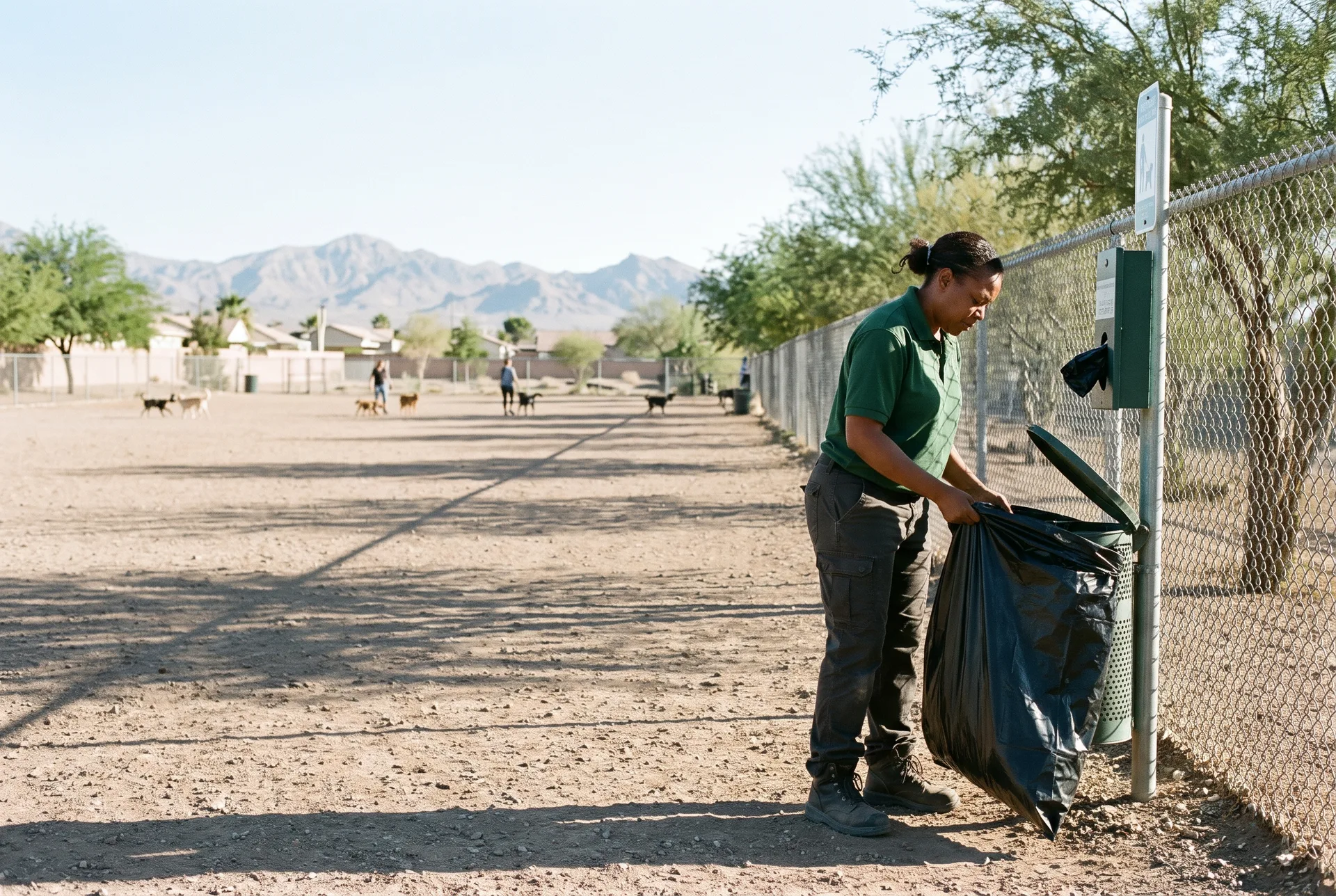
To help residents comply with the law, property managers and HOAs rely on commercial pet waste removal services. Our technicians install post-mounted pet waste stations along popular walking routes and at the entrances to shared dog parks. We return on custom schedules, often weekly or even daily, to restock the bag dispensers and empty the lidded waste bins.
By providing the bags and maintaining the stations, communities remove the primary excuse for leaving waste behind, making it easier for everyone to follow the county code and keep the neighborhood clean.