
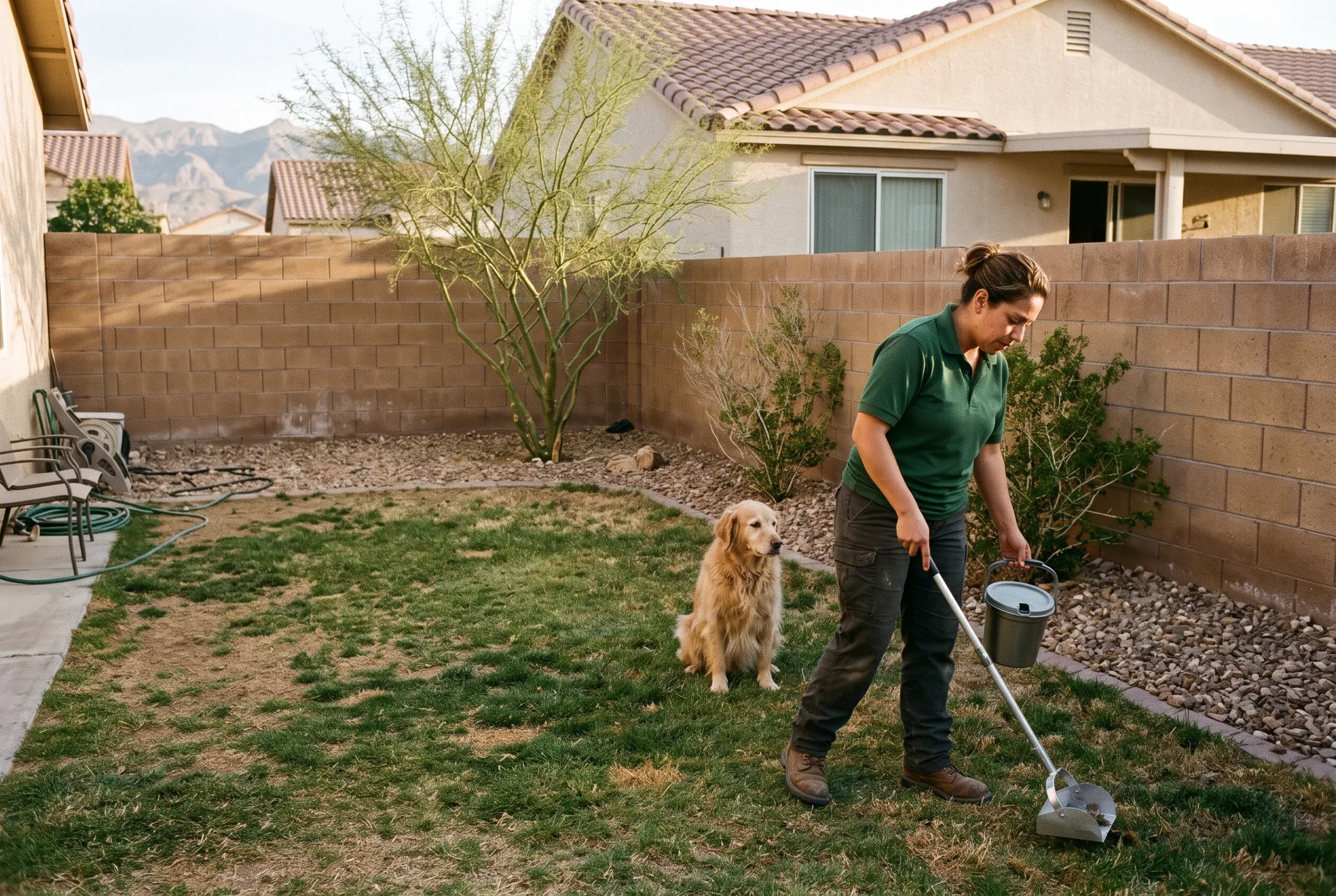
When summer arrives in Las Vegas, the rules of backyard maintenance change. With temperatures regularly climbing over 100 degrees from June through September, dog waste does not just sit on the lawn, it bakes. Understanding how this heat affects the waste in your yard will help you figure out how often you need to be out there with a scooper.
The problem with the desert heat
In a cooler climate, you might get away with cleaning the yard every other week. In Las Vegas, that schedule is a recipe for a terrible smelling patio. We average over 290 sunny days a year, and that intense, direct sunlight dries out dog waste in hours.
When waste dries on a hot surface, it bakes into the material it is sitting on. If you have decorative rock or gravel, the dried waste crumbles and mixes with the stone. If you have artificial turf, the fine organic residue melts directly into the synthetic blades. This baked-on residue is what causes that lingering, unpleasant odor that ruins a summer barbecue, even after you have picked up the solid pieces.
How your yard surface changes the timeline
The type of landscaping in your yard dictates your cleaning schedule. A traditional grass lawn, like those common in older Las Vegas and Henderson neighborhoods, offers a little forgiveness. The grass stays cooler, and the waste does not bake as hard. Once a week is usually sufficient for a single dog on a natural lawn.
However, newer master-planned communities in Summerlin and the southwest rely heavily on decorative rock and artificial turf. These surfaces trap and radiate heat. If a dog goes on artificial turf in July, that waste begins to bake into the plastic fibers the same day. For these yards, waiting a full week is often too long. The residue will settle into the turf backing, requiring a heavy rinse and an enzyme deodorizer spray just to make the yard smell normal again.
The parasite and bacteria risk
It is a common myth that the Las Vegas sun cleans the yard naturally. It does not. While the extreme heat dries the waste out, it does not eliminate the bacteria or parasites inside it.
Dog waste carries bacteria like E. coli and salmonella, along with parasites such as roundworm, hookworm and giardia. These contaminants persist in the soil and gravel long after the waste has dried up and crumbled away. When you leave waste sitting in the yard, you increase the risk of these parasites passing to your other dogs, or to people walking across the grass. The only way to lower that risk is to remove the waste entirely before it breaks down.
So, how often should you scoop?
If you have one dog and a natural grass lawn, you should clear the yard completely once a week. This prevents the waste from piling up and keeps the lawn healthy.
If you have artificial turf, decorative rock, or more than one dog, you really need to clear the yard twice a week during the summer months. Picking up the waste every three or four days prevents it from baking into the hardscaping. If you wait a full week on artificial turf with multiple dogs, the smell will likely keep you indoors.
Managing the chore
We know that going out into a hot backyard to pick up dog waste is the last thing most people want to do after work. That is why our summer routes begin at 6 AM. We get into the yards early, clear the waste, and apply a yard-safe deodorizer before the worst of the afternoon heat sets in.
If you decide to handle the chore yourself, stick to a strict schedule. Pick two days a week, maybe Wednesday evening and Sunday morning, and do not skip them. If you fall behind during a Las Vegas summer, catching up is going to be a miserable, smelly job.