
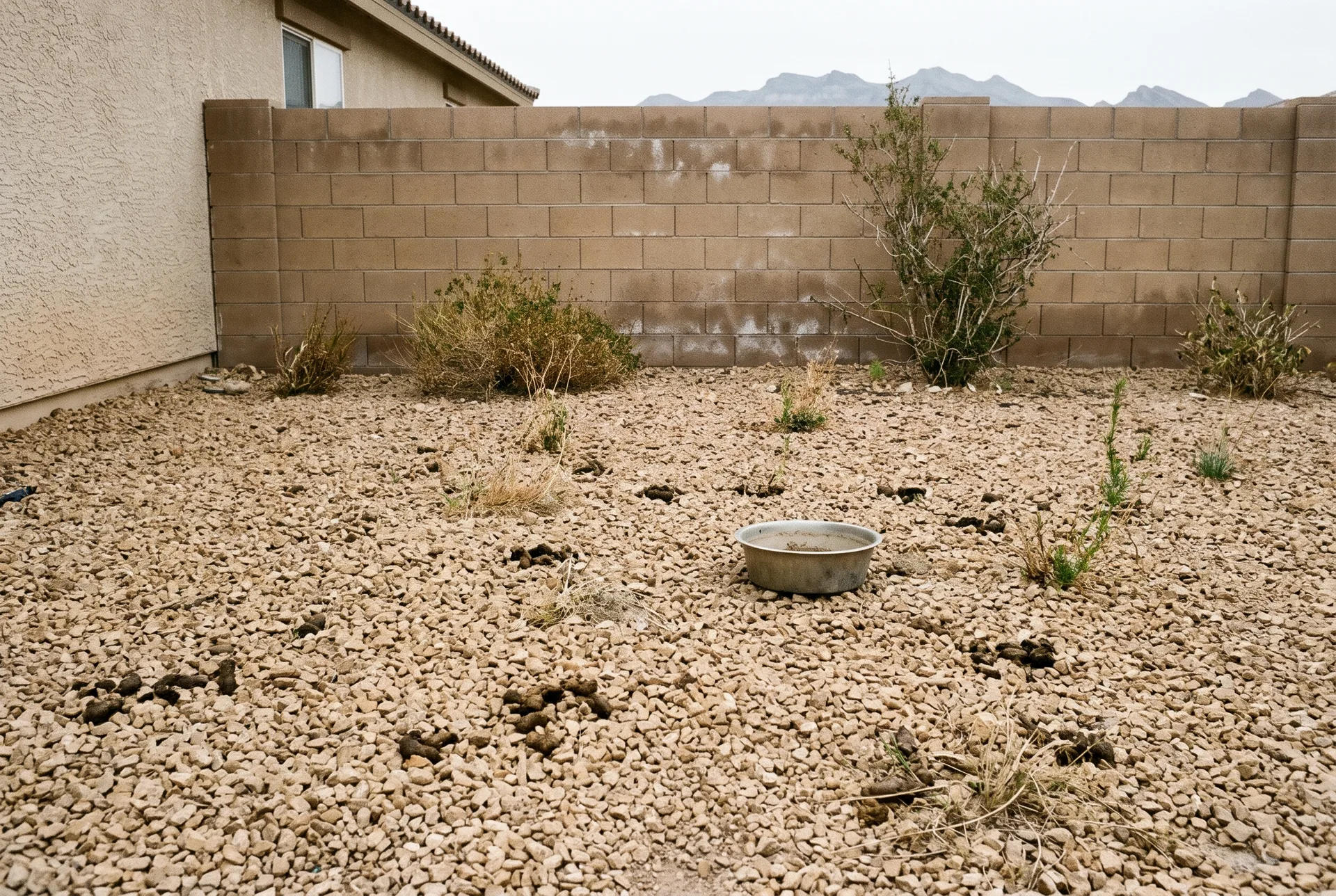
When you leave dog waste sitting in your backyard, the smell and the mess are only the visible problems. The real danger is microscopic. Dog waste is a primary carrier for bacteria like E. coli and salmonella, but the persistent threats to your pets are the parasites that thrive in contaminated soil.
It is a dangerous assumption that the extreme Las Vegas heat cleans the yard. While temperatures over 100 degrees will dry the solid waste into crumbly dust, that heat does not eliminate the parasites. In fact, when that dried waste crumbles into your decorative rock beds or the backing of your artificial turf, the invisible hazards are simply left behind to contaminate the area.
The most common backyard parasites
When our technicians walk a yard that has not been cleaned in months, we know the soil is likely harboring several common parasites.
Roundworm: This is one of the most common parasites found in dogs. The microscopic eggs are shed through the dog’s feces. Once they are in the soil, roundworm eggs are highly resilient. They can survive in the dirt for years, withstanding extreme heat and freezing winter nights. If a dog sniffs or licks the contaminated dirt, they ingest the eggs and the cycle starts again.
Hookworm: Hookworms also shed their eggs into the yard through feces. What makes hookworms hazardous is that the hatched larvae can burrow directly through a dog’s skin, usually through their paws when they walk across the contaminated area. Hookworms are also a zoonotic threat, meaning they can be transmitted to humans, especially children playing barefoot on an infected lawn.
Giardia: Giardia is a protozoan parasite that causes severe gastrointestinal issues. The cysts are passed in the dog’s waste and can survive in the environment for months, particularly in damp areas. If your yard has poor drainage or standing water from a recent monsoon storm, giardia can thrive and infect any dog that drinks from a puddle.
How the contamination spreads
Parasites do not stay confined to the specific spot where the dog went to the bathroom. When you water the grass or when heavy rain floods the yard, the water picks up the eggs and cysts and spreads them across the patio and into the garden beds. Furthermore, when dogs walk through the yard, they pick up the contaminated soil on their paws and track it directly into your house and onto your furniture.
Our sanitation protocols
Because these parasites are so resilient, we take cross-contamination very seriously on our routes. Our technicians spray their boots and tools with a kennel-grade disinfectant before opening your gate, and again when they leave. We bag the waste securely and tie it off so it never touches a shared bucket. The waste from your yard stays in your bin, making sure we never track another property’s problems onto your lawn.
Prevention is the main defense
You cannot treat a yard with a chemical to kill roundworm eggs without destroying the landscaping. Our yard deodorizer, for example, is an enzyme and probiotic spray designed strictly to break down organic residue and control odors, it is not a disinfectant and does not kill parasites.
The only effective way to protect your dogs and your family is prevention. You must remove the waste before the eggs can incubate and leach into the soil. Maintaining a strict, weekly cleanup schedule is the main defense against backyard parasites.