
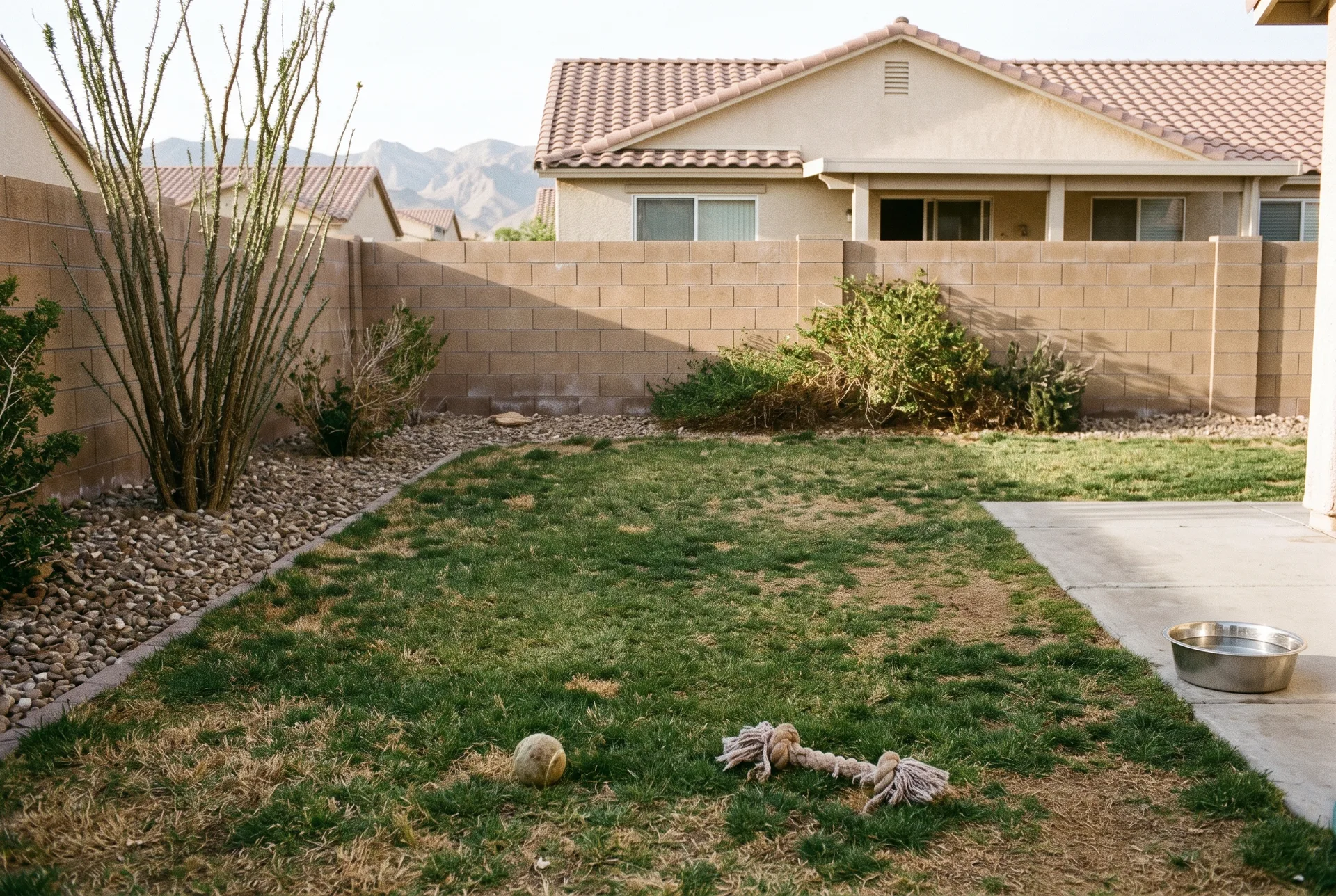
When we talk to new customers on our routes, we often hear the same assumption: that dog waste will naturally break down and feed the lawn. This is a myth, and in a climate like Las Vegas, treating dog waste like garden manure is a recipe for a ruined backyard.
Dog waste is entirely different from the material used in gardening. Because dogs eat a high-protein diet, their waste is highly acidic. It does not nourish the soil, it burns it. But the damage goes far beyond a few yellow spots on the grass.
The parasite and bacteria problem
The most significant issue with leaving waste in the yard is what you cannot see. Dog waste carries a heavy load of bacteria, including E. coli and salmonella. It is also a primary carrier for parasites like roundworm, hookworm and giardia.
When waste sits on the ground, these parasites seep into the soil. Even after the solid waste has dried up, crumbled, or been washed away by a sprinkler, the parasites persist in the dirt. This creates a contaminated environment where the parasites can easily pass to other dogs playing in the yard, or to people, especially children who might play on the grass and then touch their faces.
The intense Las Vegas sun does not solve this problem. While the summer heat (which regularly tops 100 degrees from June to September) dries the waste out, it does not clean the soil. The bacteria and parasites survive the baking process just fine.
Damage to rock and artificial turf
In newer Las Vegas master-planned communities, traditional grass lawns are rare. Most homes feature decorative rock beds or artificial turf. Dog waste causes unique problems for these hardscapes.
When waste bakes in the summer sun on a rock bed, it crumbles and mixes with the gravel. It becomes almost impossible to remove completely without scooping up the rocks as well. On artificial turf, the heat bakes the fine organic residue directly into the synthetic blades and the porous backing. This baked-in residue creates a powerful, lingering odor that can make the entire patio unusable. Rinsing the turf with a hose helps, but once the residue is trapped in the backing, you often need an enzyme deodorizer spray to break it down.
Where it goes when it rains
Las Vegas only averages about four inches of rain a year, mostly during the short, heavy monsoon storms from July to September. But when that rain hits, any uncollected dog waste becomes a wider environmental problem.
The EPA officially classes pet waste as a pollutant, in the same category as toxic chemicals and oil. When monsoon rains flood a yard, the water picks up the bacteria and parasites from the dissolving waste. Because the desert ground is hard, this contaminated water does not soak in, it runs off into the streets and down the storm drains. In our valley, those storm drains empty into the Las Vegas Wash, which eventually flows directly toward Lake Mead.
The accumulation reality
A single average-sized dog produces roughly 270 pounds of waste a year, about three-quarters of a pound every single day. If you skip cleaning the yard for just a few weeks, you are leaving a massive amount of acidic, bacteria-laden material sitting in your outdoor living space.
The only safe way to manage dog waste is to remove it completely. Whether you have natural grass in an older neighborhood or artificial turf in a new subdivision, you need a regular schedule. Walking the yard in a grid, bagging the waste securely, and putting it in the trash bin protects your soil, your pets, and the local water system.